
Upma
savory cream of wheat or rice
- 8 oz chai made with milk
- 4 oz savory cream of wheat or rice (upma)
- ½ cup vegetables
Part of the Child and Adult Care Food Program (CACFP) since 2016.
Healthy, nutritious breakfast, lunch and snacks for our Adult Day Care participants, approved by dietitians and provided daily.
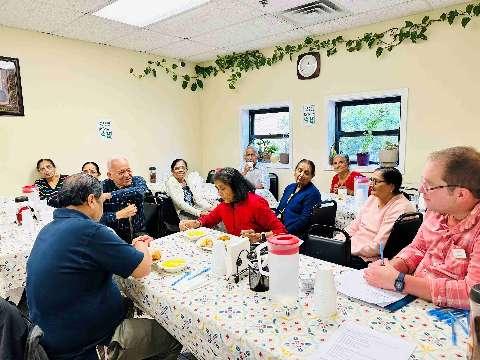
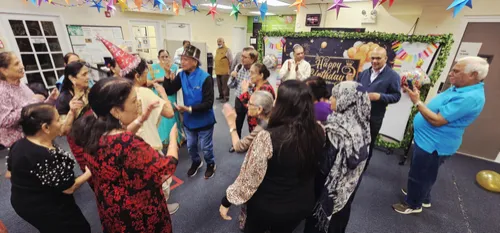
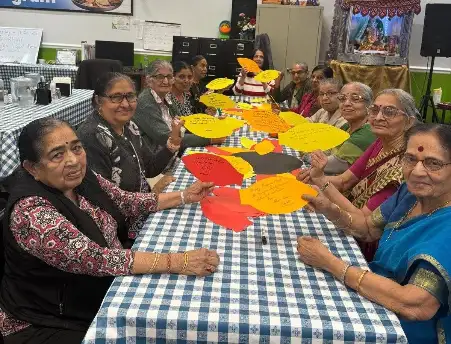
The Child and Adult Care Food Program (CACFP) is a federal program of the U.S. Department of Agriculture (USDA). It reimburses participating care centers for nutritious meals and snacks served to eligible children and adults, including adults over the age of 60 or living with a disability who are enrolled in adult day care.
In Illinois, the adult part of CACFP is run by the Illinois Department on Aging. It partially reimburses healthy meals and snacks served at Adult Day Service centers under the Community Care Program.
“CACFP meals give adults the nutrition they need as a routine part of their day care program.” U.S. Department of Agriculture
CACFP meals are for the participants of our Adult Day Care Services: adults 60 and older, or living with a disability, enrolled at our centers.
A healthy, nutritional breakfast, lunch and snacks, approved by dietitians and provided daily as part of the program day.
Under the program, a center can claim up to two meals and one snack (or two snacks and one meal) per participant each day, and no one may be treated differently because they cannot pay.
All of our adult day centers serve CACFP meals: Carol Stream, Chicago, Elgin, Naperville, Niles, Orland Park, Schaumburg, Vernon Hills.
For current menus and questions about meals at your preferred adult day center, call 847-306-7606 or contact our team.
Here is what breakfast and lunch can look like at our adult day centers. Dishes change with the season, and every meal follows USDA CACFP meal pattern guidelines.
savory cream of wheat or rice
steamed rice cakes with lentil stew
a savory mung-bean pancake
spinach with paneer
a savory mixed-dal cake
bottle gourd with chana dal
steamed rice-and-lentil cake
mung-bean dal with cauliflower, peas, and potatoes
a savory rice-and-lentil pancake
lentil-and-rice porridge with millet roti
Our menus feature vegetarian South Asian dishes, reviewed by a registered dietitian. Chai made with milk counts as the milk serving. We use less salt, oil, ghee, and sugar, with diabetes and heart health in mind, and we prefer baking, roasting, and steaming. Seasonal fruit may be swapped in as needed, and the menu may change within the dietary guidelines.
Chutney or pickled vegetables may be served as a condiment. This is a sample week, not a dated menu — meals can vary by center and season.
In accordance with federal civil rights law and U.S. Department of Agriculture (USDA) civil rights regulations and policies, this institution is prohibited from discriminating on the basis of race, color, national origin, sex (including gender identity and sexual orientation), disability, age, or reprisal or retaliation for prior civil rights activity.
Program information may be made available in languages other than English. Persons with disabilities who require alternative means of communication to obtain program information (e.g., Braille, large print, audiotape, American Sign Language), should contact the responsible state or local agency that administers the program or USDA’s TARGET Center at (202) 720-2600 (voice and TTY) or contact USDA through the Federal Relay Service at (800) 877-8339.
To file a program discrimination complaint, a Complainant should complete a Form AD-3027, USDA Program Discrimination Complaint Form which can be obtained online at: https://www.usda.gov/sites/default/files/documents/ad-3027.pdf, from any USDA office, by calling (866) 632-9992, or by writing a letter addressed to USDA. The letter must contain the complainant’s name, address, telephone number, and a written description of the alleged discriminatory action in sufficient detail to inform the Assistant Secretary for Civil Rights (ASCR) about the nature and date of an alleged civil rights violation. The completed AD-3027 form or letter must be submitted to USDA by:
This institution is an equal opportunity provider.
Call us anytime. We’ll help you find the center closest to you and guide you every step of the way.